 Scholar Nurse
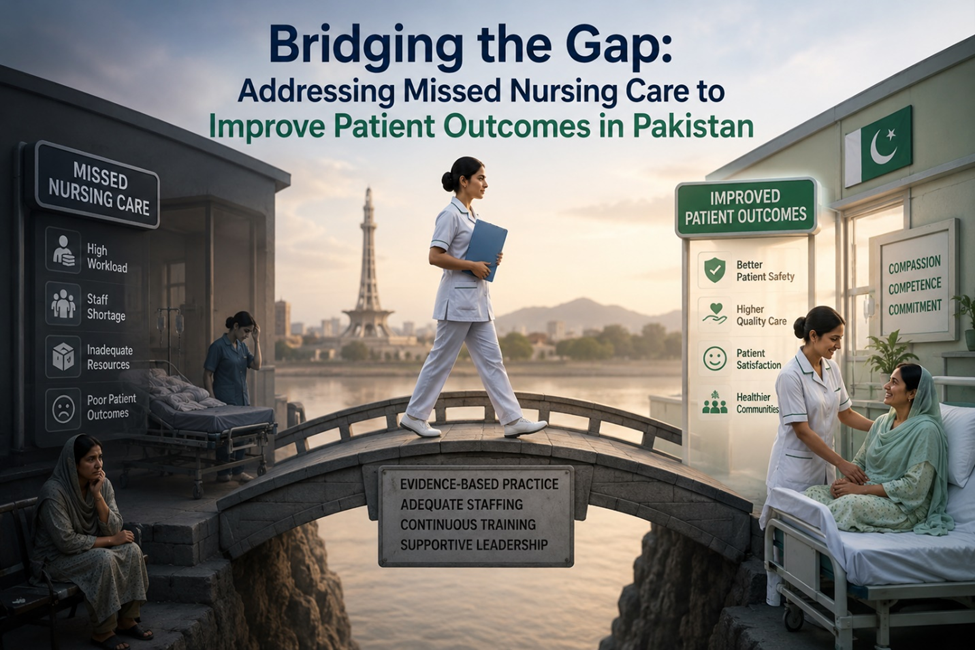
Missed Nursing Care in Pakistan: Why It Matters for Patient Safety
Missed nursing care, which refers to any necessary patient care that is postponed, partially performed, or completely neglected, has emerged as an increasing worry in healthcare systems globally. Even though frequently overlooked, it poses a direct risk to patient safety, care quality, and overall health results. Nurses serve as the primary caregivers accountable for ongoing observation, administering medication, educating patients, offering emotional support, preventing infections, and coordinating healthcare services.
When any of these duties remain unfinished, patients become susceptible to complications that could have been avoided. In Pakistan, overlooked and missed nursing care continues to be a crucial yet inadequately acknowledged problem because of ongoing difficulties in the healthcare system. Overcrowded hospitals, insufficient staffing, lack of resources, and high workloads often hinder nurses from providing thorough and prompt care. With the increasing demands for healthcare, tackling missed nursing care has emerged as a clinical need and a public health concern.
Pakistan’s healthcare system is experiencing a significant crisis in its nursing workforce, which leads to missed nursing care. The nation maintains a nurse-to-population ratio of around 5.2 nurses per 10,000 individuals, still considerably below global benchmarks (Pakistan Economic Survey, 2022). Conversely, numerous high-income nations uphold significantly safer staffing ratios, emphasizing substantial disparities in worldwide healthcare systems (World Health Organization [WHO], 2023).
In numerous public hospitals across Pakistan, a single nurse can be tasked with managing the care of multiple patients during just one shift. Such high workloads diminish nurses’ capacity to carry out crucial care tasks reliably and completely. Essential nursing actions like changing patient positions, tracking vital signs, timely medication administration, recording care, and offering health education could be postponed or completely overlooked. These oversights might seem trivial on their own, but together they can result in significant patient issues such as infections, falls, medication mistakes, extended hospitalizations, and even death (Senek et al., 2020).
The problem is further worrying when taking into account the rising disease burden in Pakistan. Hospitals are seeing an increase in admissions due to chronic illnesses, infectious diseases, trauma cases, and complications related to maternal and child health. Concurrently, medical resources continue to be scarce. Nurses frequently face the challenge of overseeing numerous patients while addressing administrative duties, responding to emergencies, and dealing with family issues all at once.
In certain healthcare environments, nurse-to-patient ratios can reportedly hit 1:40, significantly surpassing internationally recognized safe benchmarks (Pakistan Economic Survey, 2022). In these high-pressure situations, it becomes challenging to prioritize, and critical care tasks may occasionally be compromised to meet more immediate needs. This cycle leads to physical fatigue, emotional exhaustion, job dissatisfaction, and lowered morale among nurses, which further raises the chances of care being missed.
Missed nursing care is not merely due to individual carelessness; it indicates larger systemic flaws within healthcare institutions. The Missed Nursing Care Model outlines how elements like insufficient staffing, poor communication, weak teamwork, scarcity of resources, and unsupportive work settings lead to lapses in care. Studies have consistently shown that elevated patient-to-nurse ratios correlate with a rise in missed care and worse patient outcomes (Senek et al., 2020; Dutra et al., 2021).
In numerous healthcare settings, nurses often do not have enough access to the necessary equipment, medications, or technological resources required to carry out their responsibilities efficiently. Communication breakdowns among healthcare providers can lead to postponed interventions, insufficient documentation, or overlapping responsibilities. When healthcare teams fail to collaborate effectively, the continuity of care is interrupted, and patient outcomes decline.
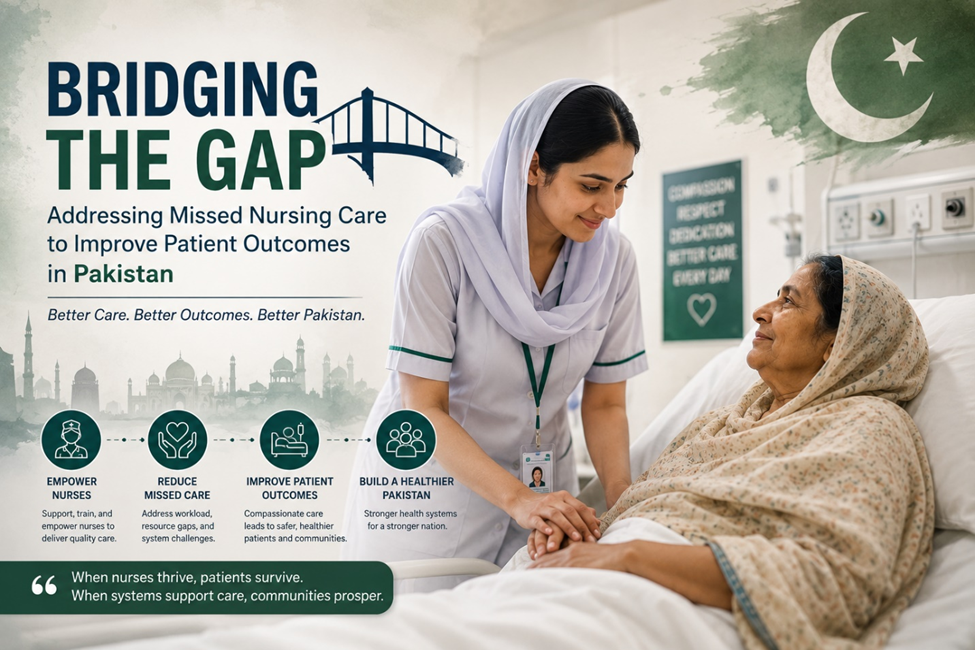
A significant factor behind missed nursing care in Pakistan is the inadequate funding for nursing education and professional growth. Despite nurses being essential to healthcare delivery, the profession frequently lacks sufficient acknowledgment and support. Numerous nurses operate in settings where chances for ongoing education, clinical instruction, and leadership advancement are restricted. Without continuous professional development, nurses might find it difficult to adjust to changing healthcare technologies and practices based on evidence.
Additionally, newly graduated nurses in high-pressure clinical settings may experience being overwhelmed by workload requirements, raising the likelihood of inadequate care provision. The persistent lack of nurses in Pakistan highlights a wider issue of inadequate investment in healthcare infrastructure and workforce growth (WHO, 2023).
The effects of neglected nursing care go beyond single patients and impact the entire healthcare system. Patients receiving delayed or insufficient care are at a higher risk of developing avoidable complications, resulting in extended hospital admissions and elevated healthcare expenses. Families might distrust healthcare institutions if patient needs are not sufficiently met. Moreover, nurses who repeatedly operate in stressful and understaffed environments frequently encounter burnout, exhaustion, anxiety, and diminished job satisfaction.
Eventually, this leads to increased turnover rates and the movement of nurses to nations that provide improved working conditions and pay. With an increasing number of nurses exiting the field or pursuing jobs overseas, staffing shortages in Pakistan worsen, perpetuating an ongoing cycle of workforce instability.
In spite of these difficulties, various strategies can assist in minimizing missed nursing care and enhancing patient outcomes. Enhancing the nursing workforce should continue to be a national focus. Healthcare leaders and policymakers need to prioritize enhancing nurse recruitment, boosting nurse retention, and guaranteeing safer nurse-to-patient ratios in medical facilities. Sufficient staffing enables nurses to allocate more time to patients, perform care tasks efficiently, and address patient needs swiftly. Funding for nursing education programs and scholarship resources can additionally aid in growing the future workforce and enhancing professional skills.
Healthcare organizations must also cultivate supportive work environments that make nurses feel appreciated, respected, and empowered. Effective nursing leadership is crucial for enhancing communication, collaboration, and responsibility in clinical environments. Nurse managers who promote teamwork and offer emotional and professional assistance can enhance staff performance and improve the quality of patient care. Consistent training sessions, mentorship opportunities, and evidence-based practice initiatives can enhance nurses’ clinical decision-making skills and confidence.
Technology can play a crucial role in minimizing missed nursing care. Digital health records, automated prescription systems, and clinical decision-support tools can enhance communication, minimize documentation mistakes, and assist nurses in handling patient information more effectively. Recent findings indicate that healthcare technologies enhance care coordination and accountability, thereby promoting safer practices for patient care (Dutra et al., 2021). In hectic hospital settings, these technologies improve care coordination and ensure that critical tasks are not missed. Although resource constraints might hinder widespread adoption in Pakistan, incremental investment in healthcare technology can enhance patient safety and nursing effectiveness in the long run.
Public recognition of the significance of nursing care is equally essential. Nursing is frequently undervalued, even though it plays a crucial role in patient recovery and wellness. Communities, healthcare leaders, and policymakers must acknowledge that quality nursing care is crucial for attaining improved health results and fulfilling global health objectives like Sustainable Development Goal 3: Good Health and Well-being (WHO, 2023). Empowering nurses with equitable policies, secure working environments, and professional acknowledgment ultimately enhances patient care, healthcare organizations, and society at large.
To summarize, unfulfilled nursing care poses a significant threat to patient safety and the quality of healthcare in Pakistan. It indicates underlying systemic problems such as workforce shortages, insufficient resources, ineffective communication, and minimal institutional backing. If not dealt with, neglected care will persist in leading to avoidable patient injury, nurse exhaustion, and inefficiencies in healthcare. Nevertheless, by implementing stronger staffing policies, investing in nursing education, fostering supportive leadership, and enhancing healthcare infrastructure, significant advancements can be made.
Nurses also have a crucial role in promoting safe practice settings and ensuring professional accountability. With the rising demands in healthcare, tackling missed nursing care should continue to be a national focus. Every healthcare provider, decision-maker, and organization must contribute to closing this gap and guaranteeing safer, more empathetic, and superior care for every patient in Pakistan.

References
Dutra, H. S., Guirardello, E. B., & Diniz, A. S. (2021). Relationship between missed nursing care and patient safety incidents: A systematic review. Journal of Nursing Management, 29(7), 1978–1987. https://doi.org/10.1111/jonm.13354
Pakistan Economic Survey. (2022). Pakistan Economic Survey 2021–22: Health and nutrition. Ministry of Finance, Government of Pakistan. https://www.finance.gov.pk
Senek, M., Robertson, S., Ryan, T., Sworn, K., King, R., Wood, E., Taylor, B., & Tod, A. (2020). Nursing care left undone in community settings: Results from a UK cross-sectional survey. Journal of Nursing Management, 28(8), 1968–1974. https://doi.org/10.1111/jonm.13078
World Health Organization. (2023). State of the world’s nursing 2023: Investing in education, jobs and leadership. World Health Organization. https://www.who.int/publications/i/item/9789240062922