 Scholar Nurse
Health Literacy in Primary Schools: Why It Matters for Diverse Learners
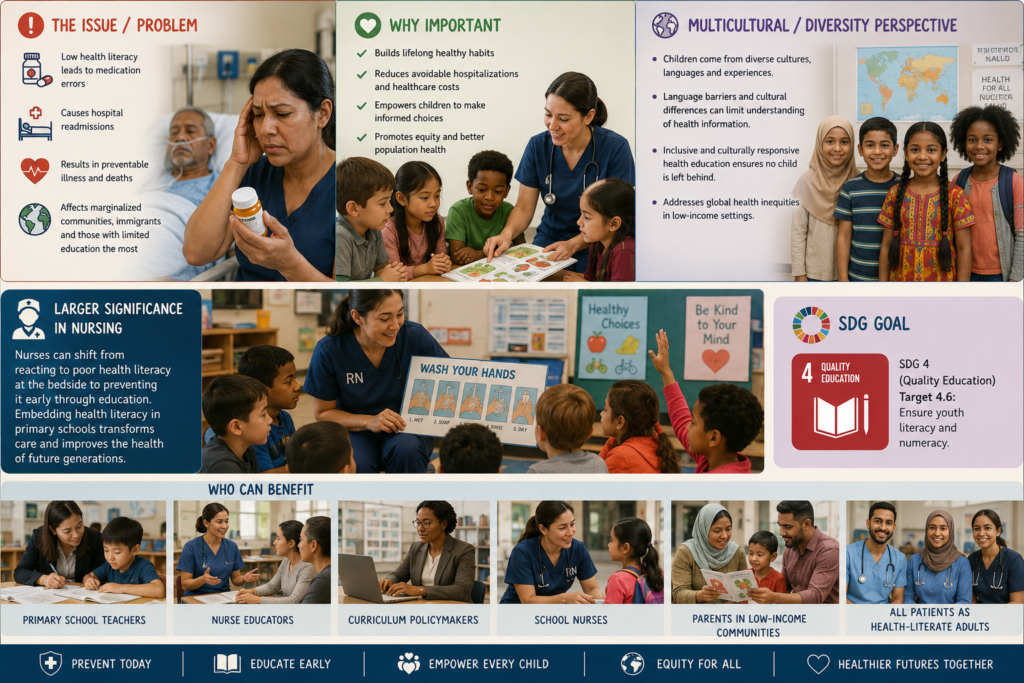
Low health literacy causes medication errors, hospital readmissions, and preventable deaths. Nearly half of adults in high-income countries cannot understand basic health information (OECD, 2019), and rates are substantially worse in low-income settings where educational infrastructure is limited. This issue disproportionately affects marginalized communities, immigrants facing language barriers, and populations with interrupted schooling. Including low-income and multicultural perspectives ensures the proposed solution addresses global health inequities, not only high-resource contexts.
Larger Significance in My Field (Nursing)
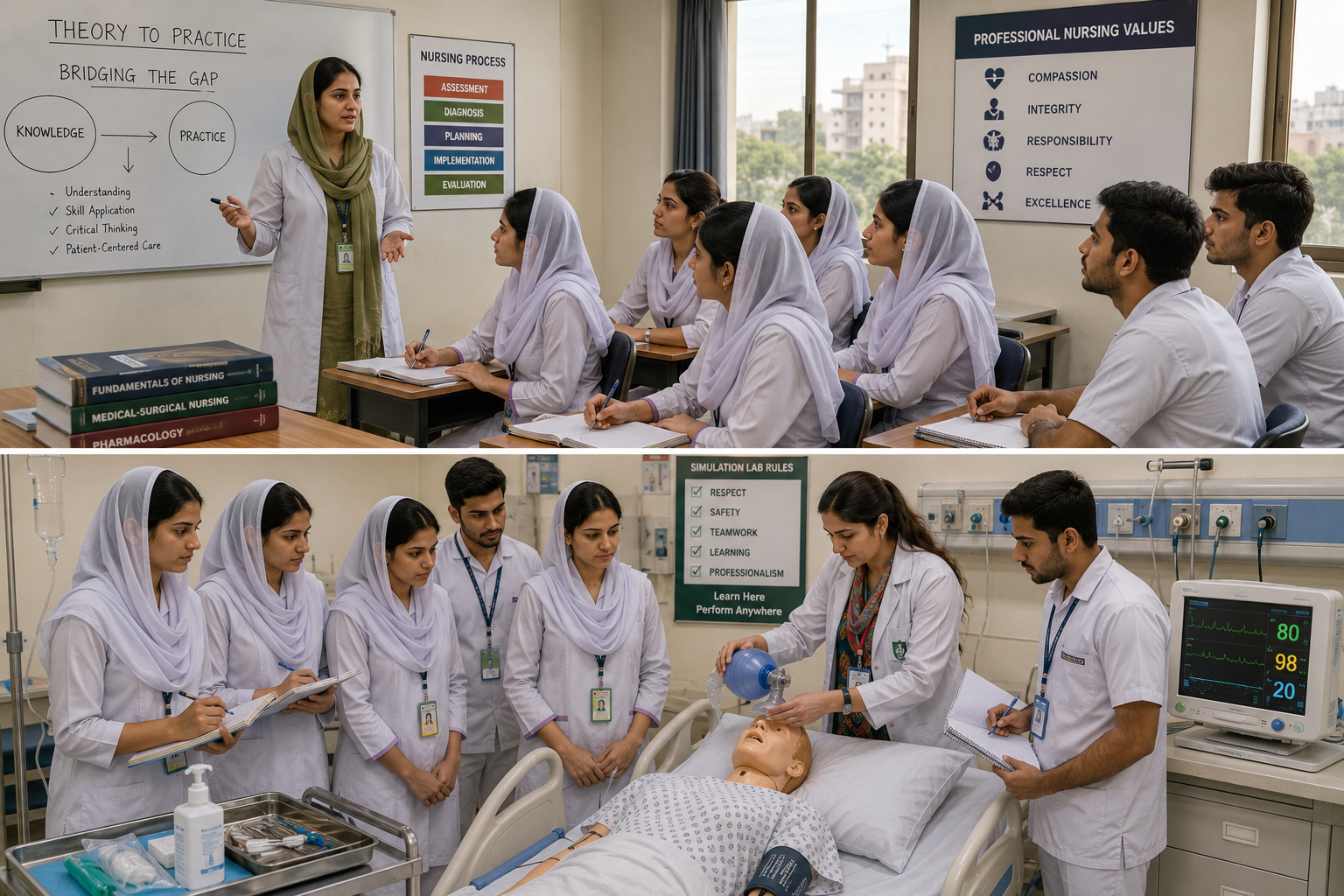
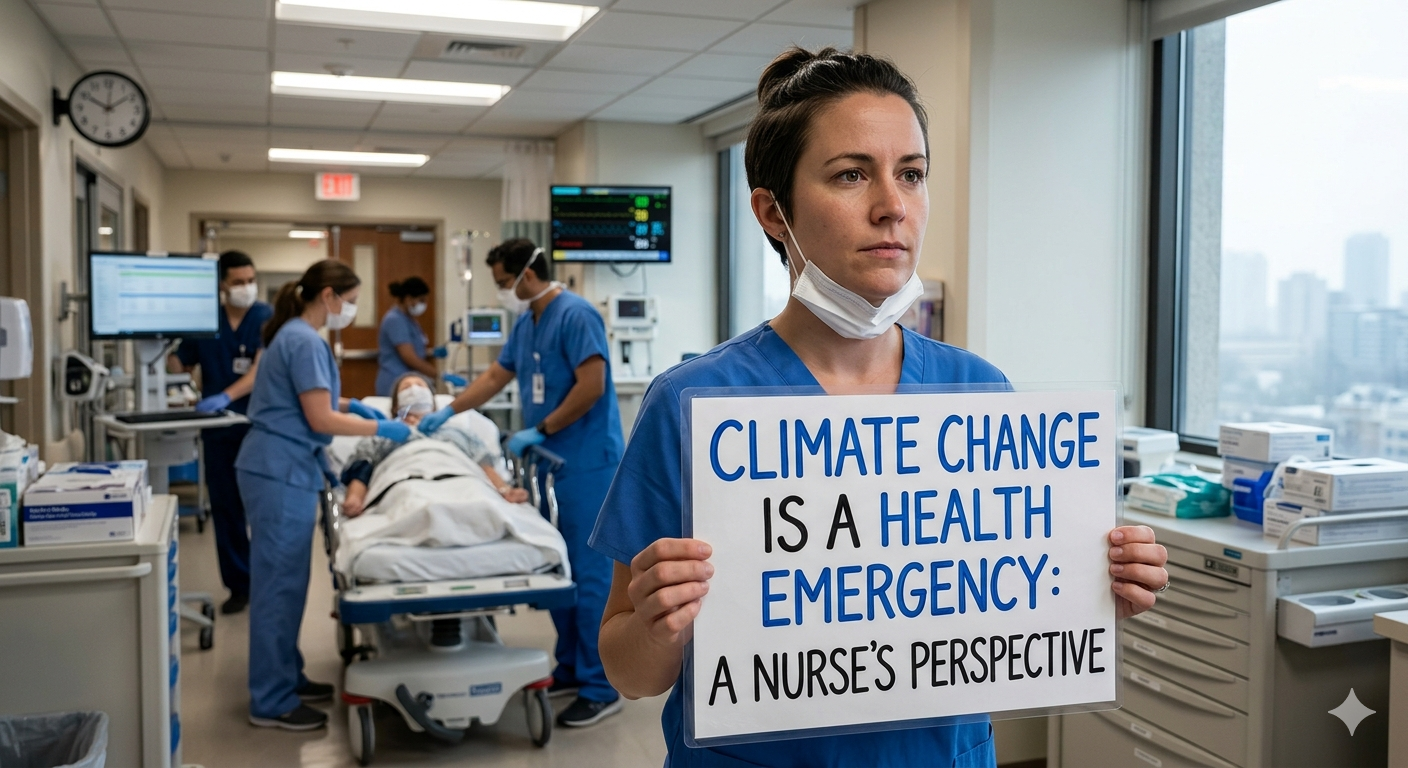
Nurses currently react to poor health literacy at the bedside using compensatory strategies (teach-back, simplified materials). This is inefficient and ethically insufficient. Embedding health literacy into primary school curricula shifts nursing from reactive care to preventive education, reducing avoidable hospitalizations and transforming population health outcomes.
SDG Goal
SDG 4 (Quality Education), specifically Target 4.6: youth literacy and numeracy.
Who Can Benefit
Primary school teachers, nurse educators, curriculum policymakers, school nurses, parents in low-income communities, and ultimately all patients who will enter healthcare systems as health-literate adults.
“Imagine a parent measuring liquid antibiotics with a kitchen spoon because no one ever taught them to read a medicine label, this is a daily reality witnessed at bedsides across the world.”
Bedside nurses often see situations where patients do not fully comprehend simple health instructions. A patient from a low-literacy rural background, newly diagnosed with diabetes, left the hospital uncertain about when to take insulin. An older adult with heart failure comes back three times within months because he found daily weight checks confusing. Studies indicate that about half of adults in wealthy countries struggle to properly understand standard health information (Osborne et al., 2022).
In communities with less access to education, the circumstances become even more difficult. Low health literacy has a stronger impact on health outcomes than a person’s age or income level (Coughlin et al., 2020). Unfortunately, current nursing addresses this issue only once patients have already fallen ill.
Global development goals emphasize that effective education should not only focus on basic reading and writing. SDG number four, specifically its sixth target, calls on countries to make sure young people develop real skills in reading, writing, and mathematics. It should cover health-related skills like understanding prescription instructions, recognizing signs of a dangerous fever, or knowing where to find reliable medical advice. Most primary schools continue to refrain from teaching these practical skills. Instead, children memorize food group names without learning transferable decision-making skills (Paakkari & Paakkari, 2012).
The solution involves integrating health topics into current lessons. A language class can review a vaccine information sheet. Mathematics practice can help determine the correct medicine dose for a child. Programmes such as HealthLit4Kids in Australia have demonstrated that integrating health education is feasible without disrupting other subjects (Nash et al., 2020).
Nurse educators should take action to prevent illness rather than waiting for it to happen. Speaking up for health literacy in early schooling, especially in under-resourced areas, is a real form of prevention. When every child finishes primary school knowing how to measure medicine and explain symptoms, hospital nurses will spend less time dealing with preventable emergencies. That change takes nursing from dealing with problems after they happen to a model that focuses on stopping issues before they arise. What one concrete step will you take this month to advance health literacy in your own clinical or community setting? Please share your ideas below.
REFERENCES
Coughlin, S. S., Vernon, M., Hatzigeorgiou, C., & George, V. (2020). Health Literacy, Social Determinants of Health, and Disease Prevention and Control. J Environ Health Sci, 6(1).
Nash, R., Cruickshank, V., Pill, S., MacDonald, A., Coleman, C., & Elmer, S. (2020). HealthLit4Kids: Dilemmas associated with student health literacy development in the primary school setting. Health Education Journal, 80(2), 173-186. https://doi.org/10.1177/0017896920961423
Osborne, R. H., Elmer, S., Hawkins, M., Cheng, C. C., Batterham, R. W., Dias, S., Good, S., Monteiro, M. G., Mikkelsen, B., Nadarajah, R. G., & Fones, G. (2022). Health literacy development is central to the prevention and control of non-communicable diseases. BMJ Glob Health, 7(12). https://doi.org/10.1136/bmjgh-2022-010362
Paakkari, L., & Paakkari, O. (2012). Health literacy as a learning outcome in schools. Health Education, 112(2), 133-152. https://doi.org/10.1108/09654281211203411
Author Bio:
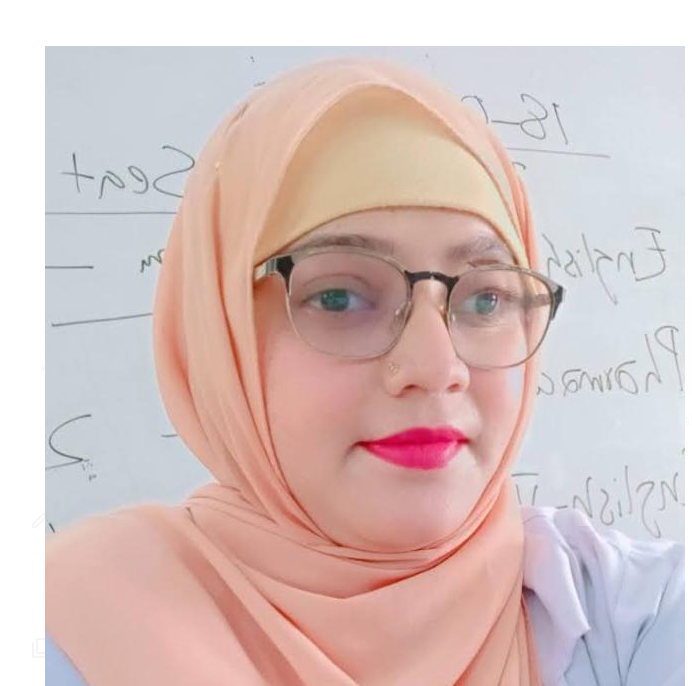
Tanzila Rajput is a Master of Science in Nursing student at Aga Khan University. She serves as a Clinical Instructor at the Government College of Nursing, Mirpurkhas. With several years of experience as a dedicated nursing educator in interior Sindh, she is committed to strengthening nursing education, clinical teaching, and professional development. Her academic and professional interests focus on improving nursing practice through education, leadership, and evidence-informed care.