 Scholar Nurse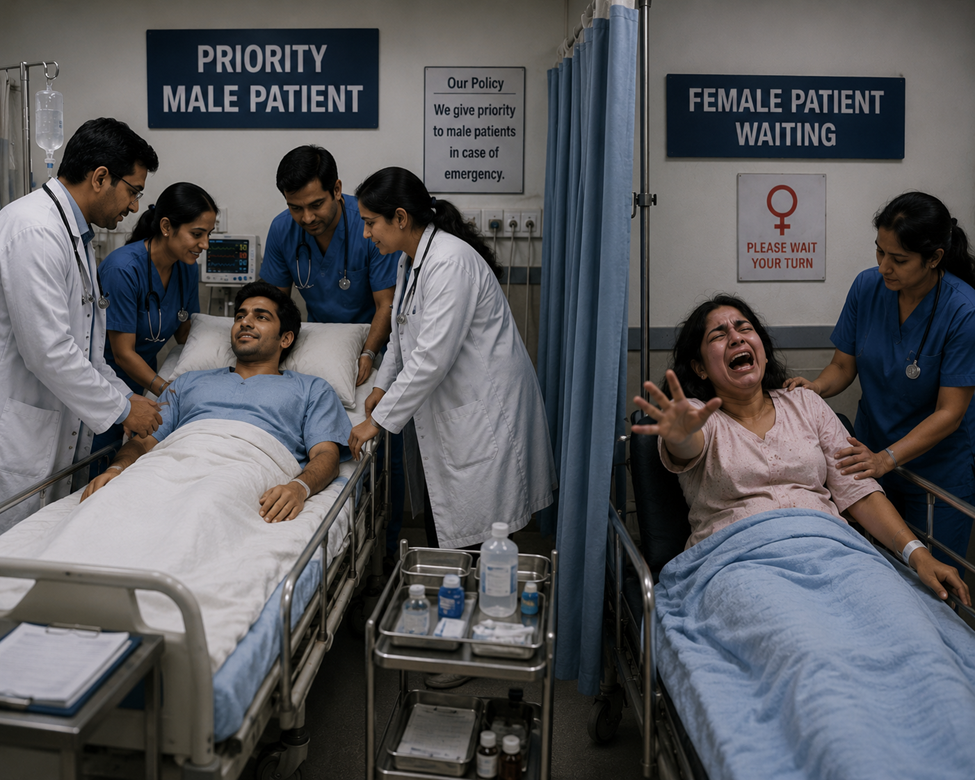
Gender Bias in Health Care: Advancing SDG 5 for Fair and Better Care
In healthcare systems, we should not provide care based on gender. Nurses are considered as frontline health care providers, and they should treat all patients equally. Gender bias or inequalities are found everywhere and in every profession. gender bias mostly affects the female gender. Sustainable Development Goal 5 (SDG 5) creates a powerful connection between gender equality and healthcare delivery by highlighting equal rights, opportunities, and access to services for both men and women.
Gender biases are often shaped by societal stereotypes rather than clinical proof. For example, women’s pain or emotional concerns may sometimes be undervalued, while men with similar complaints receive faster medical attention. These differences lead to misdiagnosed and delayed treatments. Therefore, the lower health status experienced by many women due to gender bias and gender inequality is largely preventable and controllable.
Nurses, due to their continuous interaction with patients, are in a position to identify gaps, advocate for patient rights, and promote unbiased care. By gender-sensitive healthcare practices and supporting the principles of SDG 5, nurses can contribute toward building a healthcare system based on equality, dignity, and patient-centered care to avoid gender bias (King, Kavanagh et al. 2020).
Understanding biasness in healthcare
Gender bias based on gender in healthcare is unfavorable, as healthcare providers might unintentionally implement varying standards of treatment according to a patient’s gender. This gender bias is at times observable, but in most cases, these go unnoticed, although this has an impact on the safety and recovery of patients (Webster, Taylor et al. 2022). In a hospital when a female patient complains of pain, she is labeled as “functional” or an “attention seeker,” while the male patient with similar symptoms receives immediate treatment. This example clearly violates sustainable development goal 5 (SDG 5), which seeks to promote worldwide gender equality and empower every girl. (Webster, Taylor et al. 2022).
This may occur in a variety of ways; a typical example of this can be an infertile couple, where the male spouse is rarely taken into consideration or tested, and the woman is frequently held responsible for the failure to conceive. Because of this, many home remedies and treatments primarily target women, ignoring the possibility of male infertility. This shows gender bias and may postpone the couple’s appropriate diagnosis and successful treatment. Such forms of biases may result in low-quality care and go against the nursing principles of equality and fairness and “SDGs 5.”
Biasness in Pakistani context
In Pakistan, cultural and social practices are inclined to promote gender inequalities in healthcare. Women to receive healthcare must get permission from family members, especially when the disease is private. In Pakistani society, gender discrimination influences not only healthcare access but also the attitudes of healthcare providers and families toward female patients. As a result, women do not express their disease or discomfort, which leads to serious consequences.
The whole community needs to be educated in schools and colleges and raise awareness through posters and pamphlets (Ali, Ali et al. 2022). The nurses and other health professionals must also be educated to avoid unintentional discrimination. By promoting respect, autonomy, and equal treatment, nurses can contribute significantly to achieving the goals of Sustainable Development Goal 5 (SDG 5). Their advocacy and patient-centered approach can help build a healthcare system where treatment is based on clinical need rather than gender-based.
Conclusion and recommendations
Nurses play an important role, and they are the ones who are in contact with patients 24 hours; therefore, they can address gender inequality in healthcare. These roles include advocacy and patient awareness, particularly for women regarding their rights to health and gender equality. They will be able to recognize the differences and promote equitable treatment because of their personal relationship with the patients. Advocacy is one of the key duties.
Second, patients will be educated on their rights to health, with a focus on women. Thirdly, it is important to be sensitive to cultural differences without violating the autonomy of patients. The fourth is gender parity in healthcare policy and staffing. Lastly, ensuring care of clinical needs and not gender opinion. By integrating roles and using them in daily tasks, nurses can make direct contributions to the achievement of “SDGs 5” (Fund 2015).
References
Ali, T. S., S. S. Ali, S. Nadeem, Z. Memon, S. Soofi, F. Madhani, Y. Karim, S. Mohammad and Z. A. Bhutta (2022). “Perpetuation of gender discrimination in Pakistani society: results from a scoping review and qualitative study conducted in three provinces of Pakistan.” BMC Womens Health 22(1): 540.
Fund, S. (2015). “Sustainable development goals.” Available at this link: https://www. un. org/sustainabledevelopment/inequality.
King, T. L., A. Kavanagh, A. J. Scovelle and A. Milner (2020). “Associations between gender equality and health: a systematic review.” Health Promotion International 35(1): 27-41.
Webster, C. S., S. Taylor, C. Thomas and J. M. Weller (2022). “Social bias, discrimination and inequity in healthcare: mechanisms, implications and recommendations.” BJA Education 22(4): 131-137.
About the Author
I am Zeeshan Khan, a registered nurse who worked at the Pakistan Kidney and Liver Institute Lahore, Rehman Medical Institute Peshawar, and Saidu Group of Teaching Hospitals Swat. I have 7 years of experience, and I am currently enrolled in MScN at Aga Khan University, Karachi.