 Scholar Nurse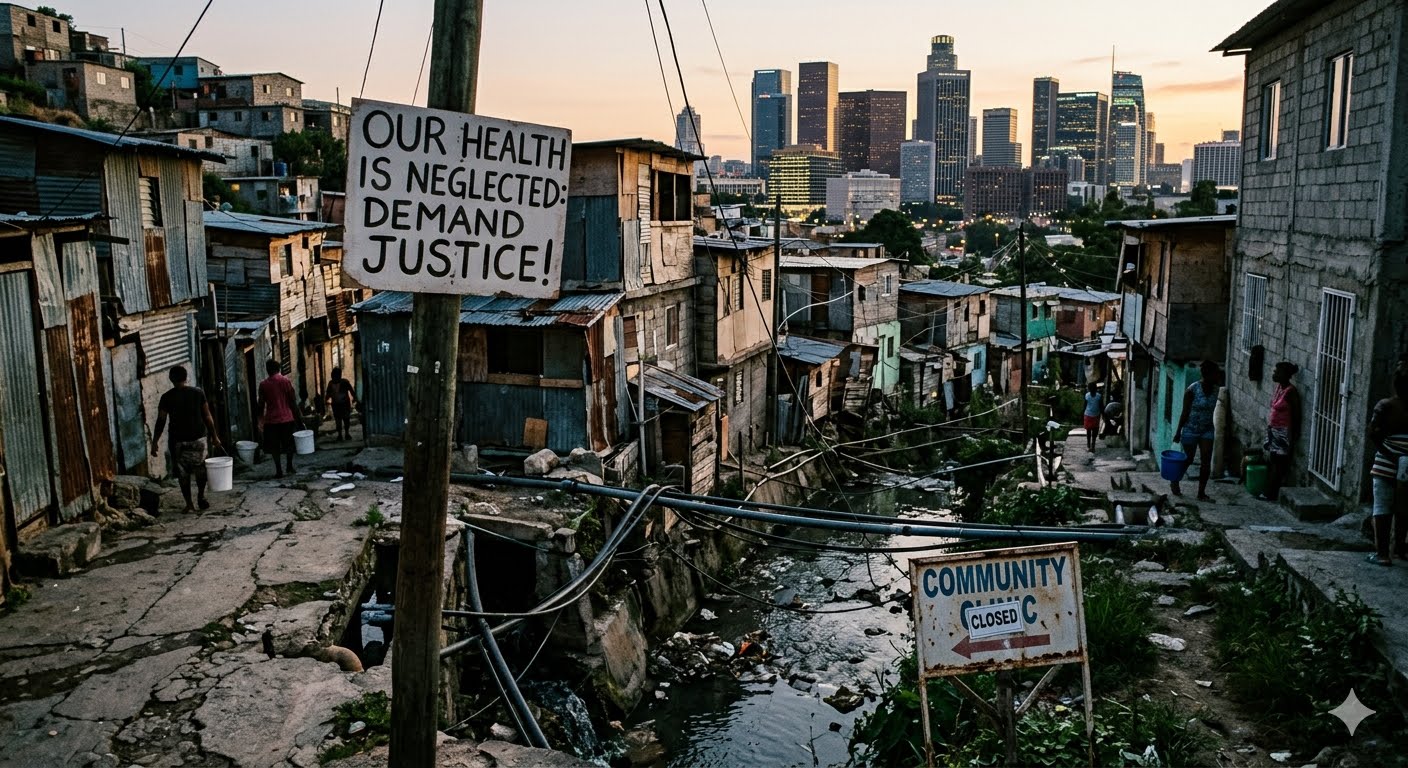
Powerful Justice for a Safer World: Advancing SDG 16
Peace, Justice, and Health: A Neglected Connection
Suppose that in a country patients were not able to arrive at a clinic safely, health care workers were detained, and hospitals were bombed. For millions of individuals in conflict-ridden and institutionally fragile states, this is indeed a reality. SDG 16 emphasizes SDG 16 and 9. Promote peaceful and inclusive societies; ensure access to justice for all; and build effective, accountable, and inclusive institutions at all levels, which encourages the international community to foster peaceful and inclusive societies with access to justice for all and effective, accountable, and inclusive institutions at all levels (Transforming Our World: The 2030 Agenda for Sustainable Development | Department of Economic and Social Affairs, n.d.).
Although far removed from clinical practice, SDG 16 is the foundation for all other development goals, including health. Peace is the precondition for healthcare delivery to take place. Justice is essential to ensure that marginalized groups are not left behind. Corruption, inefficiency, and impunity can lead to the collapse of public health systems without strong institutions in place. The facts are clear: political instability, poor governance, and systemic injustice are among the strongest but less recognized factors affecting global health.
Conflict, Corruption, and the Collapse of Health Systems
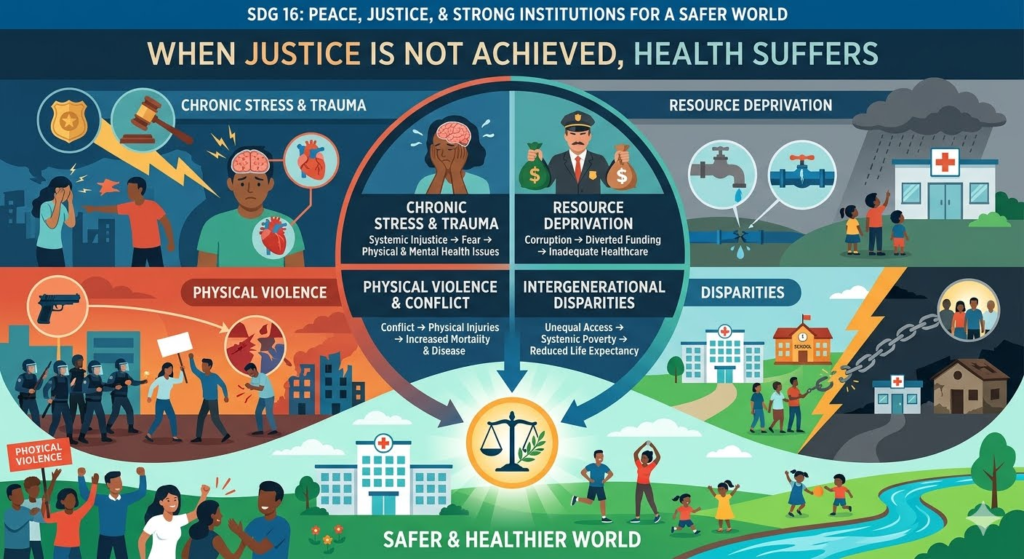
Violence, conflict, and institutional dysfunction have a devastating impact on public health globally. According to the United Nations report, around 2 billion people are in countries with fragility, conflict, and violence, where maternal mortality rates are much higher, vaccination coverage is much lower, and the functionality of health systems is often interrupted.
Armed conflict disrupts health systems, forces health workers from their posts, and leaves entire populations exposed to injury, psychological harm, and communicable disease (United Nations Statistics Division, n.d.). In one year alone, the Stopping Attacks on Health Care, 2020, report documented more than 1,000 attacks on health facilities in conflict areas, all of which were legally illegal as well as a direct threat to people’s lives. At the same time, corruption in public institutions, which is listed as one of SDG 16’s key concerns, diverts funds for vital services. According to Transparency International (TI) (2023), the worldwide losses to corruption in the health sector are estimated as large as USD 500 billion annually, with low-income countries being impacted the most.
The global losses to corruption in the health sector are estimated to be as high as USD 500 billion per year (TI 2023), with low-income countries being the hardest hit. Poor governance, poor accountability mechanisms, and health financing deficits have consistently affected health financing, drug stock-outs, and trust in health institutions in Pakistan (WHO Pakistan, 2022). It has a huge impact on nursing and public health: when institutions are weak and unjust, it is frontline health workers, mostly women, who bear the brunt of the effects, without any supplies, security, or legal safeguards.
Structural Injustice, Marginalized Communities, and the Nursing Imperative
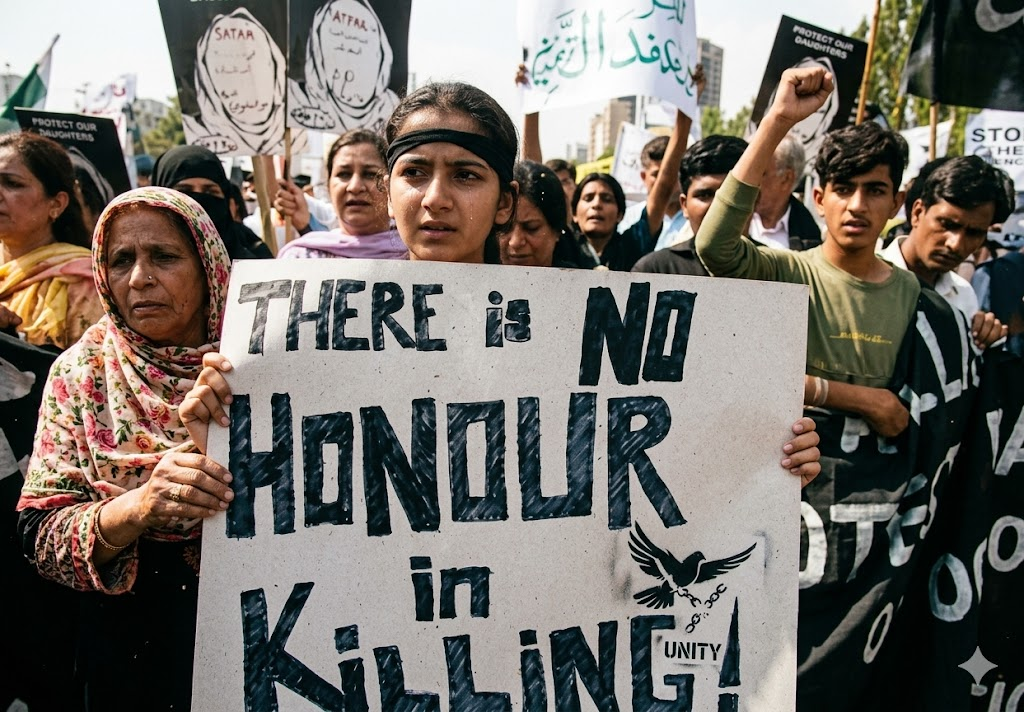
In relation to health equity, SDG 16 is especially stark for the marginalized communities. Structural injustice, which is a result of discrimination on the basis of gender, ethnicity, religion, and/or socioeconomic status, restricts access to legal avenues, health care, and social security. Research at UNICEF points out that in countries with low levels of rule of law, children suffer more from the lack of access to health services and education and from child labor than adults, perpetuating intergenerational poverty and poor health (The State of the World’s Children 2023, 2023).
According to the Sustainable Development Report (2024), there has been no progress toward SDG 16 at the global level, and indicators for reduction of violence and transparency of institutions have declined in more than 40 countries since 2020. Perhaps most significantly, the COVID-19 pandemic revealed the impact of institutional weakness on health crises: countries with weak governance performance have been slower to implement vaccination programs, weaker in monitoring disease outbreaks, and experienced higher excess mortality (Fragility, Conflict and Violence, n.d.-b).
These settings are especially demanding for nurses and midwives, who are sometimes the only health care workers available in communities lacking or unable to deliver government-provided health services. These realities call into question the ethics of healthcare professionals, particularly in the institutions where they work, such as Aga Khan University, where advocacy for peace and justice is not separate from nursing care but is part of it.
A Call to Action: Health Professionals as Advocates for Peace and Accountability
Working towards SDG 16 is a global challenge but also a personal one for healthcare workers. Peace is not simply the lack of armed conflict; it is the presence of working institutions, easy access to justice, and communities where people feel free enough to access care. We, as nurses, midwives, and public health professionals, occupy a unique space in relation to the vulnerability of human beings and the response of the institutions.
We are privileged and responsible as nurses, midwives, and public health professionals in a unique space between the vulnerability of the human being and the response of the institution. Policy advocacy for the protection of civilians and health workers in conflict areas is needed, along with transparency and accountability in health system governance and a challenge to the systemic inequalities that leave justice out of reach for the most marginalized.
Going forward, a collaborative effort was needed between healthcare providers, legal frameworks, civil society, and international organizations. We need to have this discussion with our communities. What is justice like in your health care setting? What impact do you think enhanced institutions would have on the lives of those you serve as a patient? I invite you to reflect, share, and be a part of this critical conversation, for when justice is lacking, it is not just an abstraction that is hurt. Their health and lives are at stake, and they are real people in real communities.
Author bio
Akash Anand completed his Bachelor of Science in Nursing (BSN) from Liaquat University of Medical and Health Sciences in 2023. He is currently pursuing a master’s degree at Aga Khan University, Karachi, with a strong interest in advancing nursing education and healthcare practice. In 2026, he successfully passed the NCLEX examination, marking an important milestone in his professional journey. Akash is passionate about patient care, evidence-based practice, and clinical excellence.
References
Fragility, conflict and violence. (n.d.-b). World Bank Group. https://www.worldbank.org/en/topic/fragilityconflictviolence
Stopping attacks on health care. (2020, December 9). https://www.who.int/activities/stopping-attacks-on-health-care
Transparency International. (2024, April 16). Global Corruption Barometer. Transparency.org. https://www.transparency.org/en/gcb
The State of the World’s Children 2023. (2023, April 1). UNICEF. https://www.unicef.org/reports/state-worlds-children-2023
Transforming our world: the 2030 Agenda for Sustainable Development | Department of Economic and Social Affairs. (n.d.). https://sdgs.un.org/2030agenda
United Nations Statistics Division. (n.d.). — SDG indicators. https://unstats.un.org/sdgs/report/2023/