 Scholar Nurse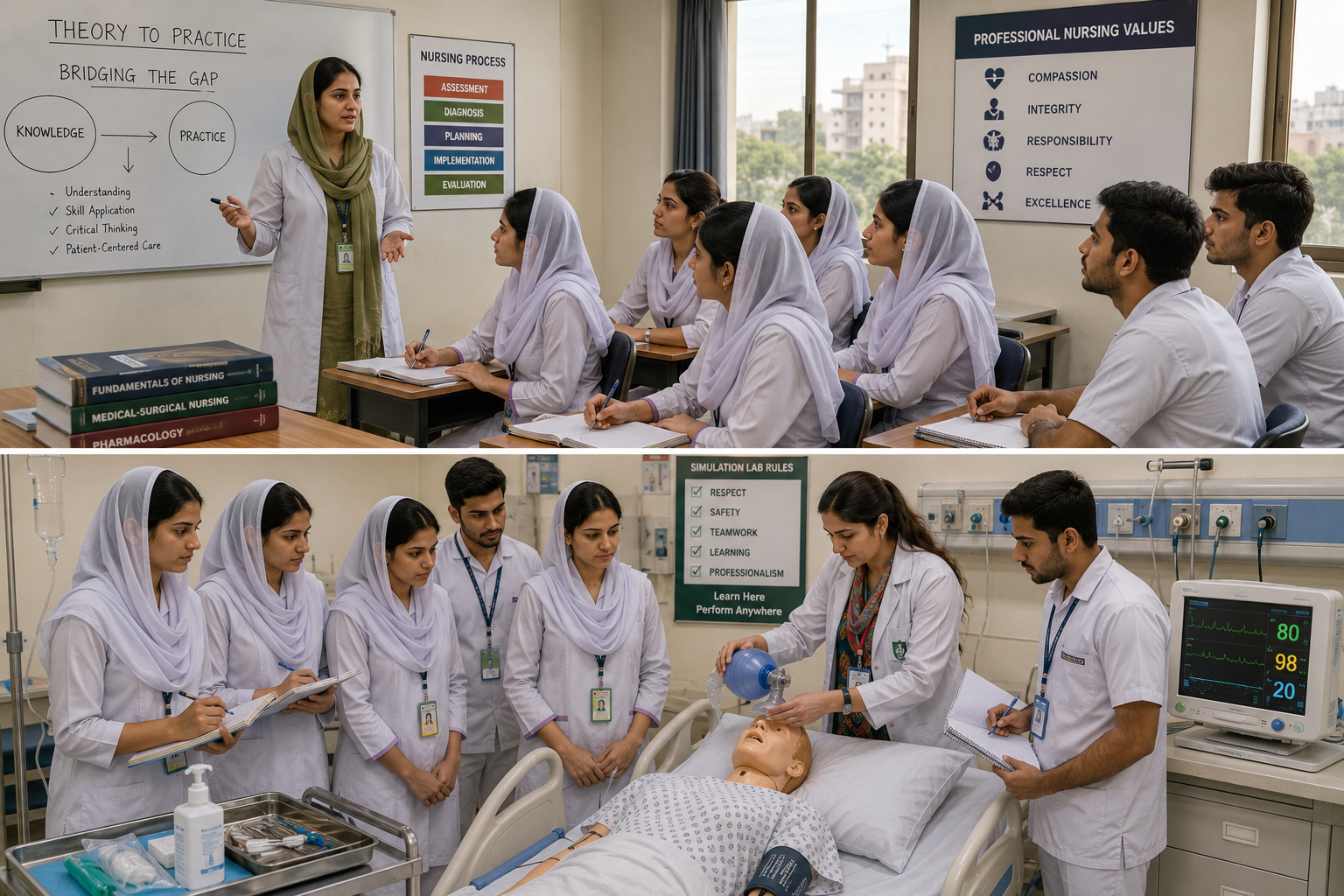
From the Classroom to the Clinical Ward: Bridging the Theory–Practice Gap in Nursing Education
Introduction
In contemporary healthcare systems, nurses play a pivotal role in delivering high-quality care across various settings. However, ensuring that nurses possess both current theoretical knowledge and proficient practical skills remains a persistent challenge. Nursing is both a science and an art, and nurses are the backbone of every healthcare system. Yet one of the most persistent challenges is the theory-practice gap: the disconnect between what nursing students learn in the classroom and what they encounter in real clinical settings. Singh et al. (2024) emphasized that integrating theoretical and practical components of nursing education is essential to address this challenge effectively.
For me, this confrontation came on the very first day of my clinical rotation as a first-year nursing student. I entered the ward carrying months of classroom learning, only to discover that knowledge alone could not prepare me for the reality of caring for a real patient. Drawing on both evidence and personal reflection, this article explores the challenges of bridging the theory-practice gap, examines Pakistan’s nursing education context, and highlights evidence-based solutions that support the development of competent, compassionate nurses.
The foundations of Nursing Education
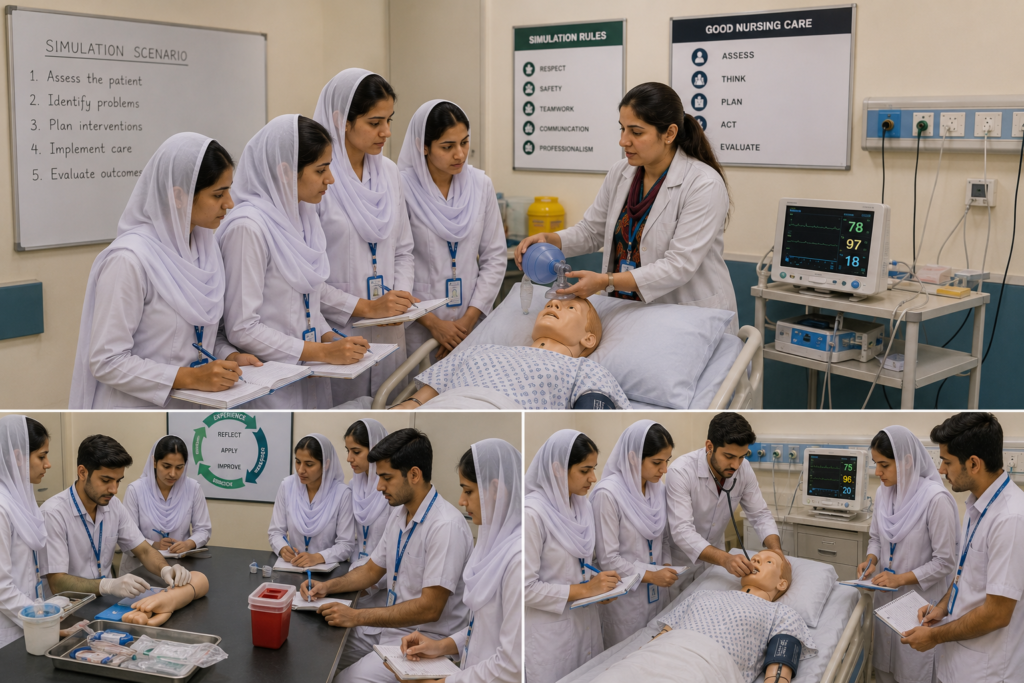
Nursing education is built on a strong theoretical foundation. Students spend their early years learning anatomy, physiology, pharmacology, and pathophysiology alongside evidence-based nursing frameworks that support holistic, patient-centered decision-making. This knowledge is reinforced through simulation-based learning, where students practice clinical skills on mannequins, participate in therapeutic communication through role-plays, and work through case studies and health promotion scenarios. Afonso and Amaral (2025) demonstrated that simulation and case-based learning serve as student-centered approaches that bridge the gap between theory and practice while developing critical thinking and communication skills. Clinical assignments such as health promotion seminars, case studies, and reflective portfolios further build the confidence and competence needed before entering real healthcare settings.
Transition from Classroom to Clinical Practice
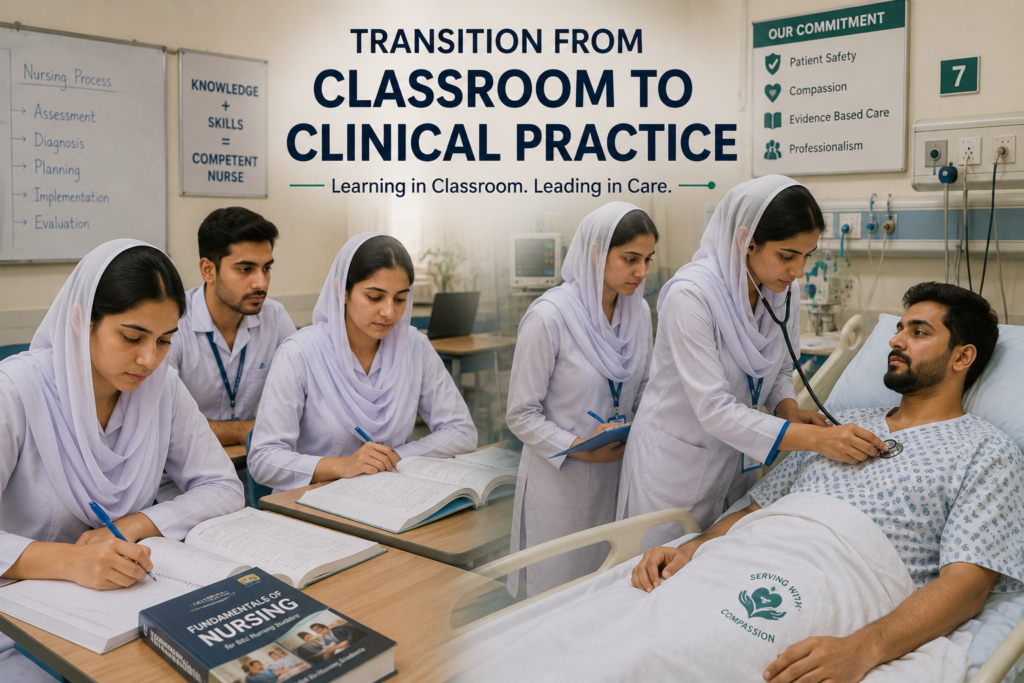
I remember walking through the ward doors for the first time with a clarity that has not faded. As a first-year nursing student, I felt excited after months of preparation, yet quietly anxious about making a mistake. Ngozika Ugwu et al. (2023) reported that nursing students commonly experience feelings of inadequacy and emotional overwhelm during early clinical placements, particularly when they encounter situations not covered in their theoretical training. That was exactly what I experienced. I understood the theory and knew the steps of a patient assessment. I had rehearsed therapeutic communication. But I quickly realized that knowing about nursing and actually doing nursing are separated by an enormous distance.
My clinical instructor assigned me to a bedridden patient whose story stayed with me long after the shift had ended. She had been diagnosed with breast cancer years earlier, had undergone a mastectomy, completed treatment, and returned to life. Then cancer returned this time, duodenal cancer, bringing a level of clinical complexity I had never encountered before. She presented with generalized edema, multiple invasive lines, and perineal ulcers requiring sensitive, skilled, and compassionate care.
Despite everything she was enduring, she remained patient, cooperative, and remarkably kind. She dignity and me throughout the procedure, communicated her needs with dignity, and thanked me. In that moment, I realized that nursing extends far beyond performing procedures. Behind every diagnosis is a person with a unique story, resilience, and strength. That encounter taught me that true competence is achieved not only through knowledge and technical skills but also through empathy, respect, and compassionate care.
The Theory–Practice Gap in Pakistan’s Nursing Education
The theory–practice gap is particularly concerning in Pakistan, where many nursing institutions continue to face challenges in delivering quality clinical education. According to Nursearcher (2025), outdated curricula, limited simulation facilities, and inadequate practical training, especially in unregulated private colleges, leave many graduates underprepared for clinical practice. Supporting this concern, a 2023 study published in the Pakistan Journal of Medical and Health Sciences found that 65.63% of nursing participants demonstrated poor knowledge regarding the theory–practice gap, highlighting the urgent need to strengthen nursing education and clinical training.
Challenges in Bridging the Theory-Practice Gap
Clinical training is a core component of nursing education, yet students frequently encounter challenges that affect their learning and professional development. Identifying these challenges is essential to designing effective clinical training programs (Rodriguez-Leal et al., 2023).
- Fear, Anxiety, and Limited Confidence
Nursing students often experience fear and uncertainty when applying theoretical knowledge to real patient care. Limited confidence affects clinical decision-making, communication, and the willingness to perform procedures independently. These emotional burdens are well documented in literature and are among the most significant barriers to effective clinical learning.
- Incongruence Between Theory and Clinical Practice
Evidence-based protocols taught in the classroom do not always align with the realities of busy healthcare settings. Variations in resources, institutional practices, and patient complexity can create confusion as students integrate theory with practice. Singh et al. (2024) identified this incongruence as a key systemic barrier to closing the theory-practice gap.
- Limited Experiential Learning Opportunities
Although clinical placements are designed to reinforce learning, opportunities to perform skills are often limited by patient safety concerns, high patient acuity, restricted supervision, or institutional policies. These constraints reduce hands-on skill development at a critical stage of professional formation.
Evidence-Based Solutions for Bridging the Gap
Addressing the theory–practice gap requires collaborative, evidence-informed interventions across nursing education and clinical practice. Current evidence suggests that the following strategies can strengthen students’ confidence, clinical competence, and preparedness for professional practice.
- Strengthening Simulation-Based Learning
Clinical simulation is one of the most evidence-supported strategies for reducing the theory-practice gap. Koukourikos et al. (2021) found that simulation-based learning significantly improved nursing students’ clinical confidence, decision-making skills, and ability to transfer knowledge into practice. High-fidelity simulation allows students to practice complex clinical scenarios in a safe environment before encountering them with real patients.
- Reflective Clinical Assignments
Structured clinical assignments are powerful tools for bridging theory and practice. In my own training, assignments such as Functional Health Patterns (FHPS), Concept Integrated Maps (CIM), case studies, and patient education required me to analyze patient situations through evidence-based frameworks and reflect critically on my clinical decisions.
- Clinical Orientation and Mentorship
Saifan et al. (2021) identified adequate clinical orientation and supportive preceptorship as among the most effective solutions for closing the theory-practice gap. A thorough orientation to ward policies, documentation systems, and communication norms reduces cognitive load on students, allowing them to focus on patient care rather than navigating an unfamiliar environment. A supportive preceptor who models clinical reasoning and normalizes uncertainty builds the confidence that theory alone cannot provide.
- Curriculum Integration
The most effective nursing programs integrate theory and practice continuously rather than treating them as separate phases. Singh et al. (2024) emphasized that clinically informed curriculum content and collaborative relationships between academic institutions and healthcare facilities are key facilitators for closing the gap. Case-based learning, reflective journals, and regular clinical feedback all strengthen the connection between classroom and bedside.
Recommendations
The theory-practice gap in Pakistan requires sustained effort at both institutional and national levels. Nursing schools should invest in high-fidelity simulation laboratories and reform curriculum to reflect current clinical standards, with faculty maintaining active clinical engagement. Structured orientation programs should be standardized at the start of every rotation to reduce anxiety and improve readiness. Reflective learning including case studies, clinical incident analyses, and assignment-based reflection should be embedded across all years of study, and formal preceptorship programs developed to provide students with consistent guidance throughout clinical training.
At an individual level, nurses themselves also have a role to play. Seeking feedback actively, reflecting honestly on clinical experiences, and identifying personal knowledge gaps are habits that must be cultivated from the very first clinical rotation.
Conclusion
In conclusion, the theory–practice gap remains one of the most significant challenges in nursing education worldwide, affecting students’ confidence, clinical competence, and readiness for professional practice. In Pakistan, this gap is further widened by challenges such as outdated curriculum, inadequate simulation resources, inconsistent clinical training, and limited mentorship. Bridging this divide requires a shared commitment from nursing educators, healthcare institutions, and policymakers to strengthen clinical education through evidence-based teaching, meaningful mentorship, and greater investment in experiential learning.
Although evidence supports simulation-based learning, preceptorship, and reflective practice, context-specific research for Pakistan remains limited. Future studies should evaluate sustainable, culturally relevant approaches that strengthen the transition from classroom to clinical practice in resource-constrained settings.
Ultimately, narrowing the theory–practice gap is a collective responsibility. Educators must provide meaningful learning opportunities, institutions should foster supportive clinical environments, and policymakers must prioritize investment in nursing education. Nursing students, in turn, should embrace reflective practice and approach each clinical encounter as an opportunity to grow. While the classroom provides the foundation, it is through real patient care that theoretical knowledge evolves into confident clinical judgment and compassionate practice.
References
Afonso, C., & Amaral, O. (2025). From theory to practice: Implementing case-based learning in a family health nursing master’s course. SAGE Open Nursing, 11, 23779608251379102. https://doi.org/10.1177/23779608251379102
Hameed, A., Abdullahi, K. O., & Yaqoob, A. (2023). Knowledge of Pakistani Nurses about Theory Practice Gap in Nursing. Pakistan Journal of Medical and Health Sciences, 17(3), 40–42. https://doi.org/10.53350/pjmhs202317340
Koukourikos, K., Tsaloglidou, A., Kourkouta, L., Papathanasiou, I., Iliadis, C., Fratzana, A., & Panagiotou, A. (2021). Simulation in clinical nursing education. Acta Informatica Medica, 29(1), 15. https://doi.org/10.5455/aim.2021.29.15-20
Ngozika Ugwu, S., Ogbonnaya, N. P., Chijioke, V. C., & Esievo, J. N. (2023). Causes and effects of theory-practice gap during clinical practice: The lived experiences of baccalaureate nursing students. International Journal of Qualitative Studies on Health and Well-being, 18(1), 2164949. https://doi.org/10.1080/17482631.2023.2164949
Nursearcher. (2025). Confronting the challenges of nursing in Pakistan. Journal of Nursing & Midwifery Sciences. https://www.nursearcher.com/index.php/nrs/article/view/176
Rodríguez-Leal, L., González-Hervías, R., Silva, L. I. M., Rodríguez-Gallego, I., Saldaña, M. R., & Montesinos, J. V. B. (2023). Stressors inherent to clinical practices and their relationship with emotional intelligence in nursing students. Nurse Education Today, 124, 105753. https://doi.org/10.1016/j.nedt.2023.105753
Saifan, A., Devadas, B., Daradkeh, F., Abdel-Fattah, H., Aljabery, M., & Michael, L. M. (2021). Solutions to bridge the theory-practice gap in nursing education in the UAE: A qualitative study. BMC Medical Education, 21(1), 1–11. https://doi.org/10.1186/s12909-021-02919-x
Singh, K., Alomari, A. M. A., Sayed, H. M. A., Mannethodi, K., Kunjavara, J., Joy, G. V., Hassan, N., Martinez, E., & Lenjawi, B. A. (2024). Barriers and solutions to the gap between theory and practice in nursing services: A systematic review of qualitative evidence. Nursing Forum, 2024(1). https://doi.org/10.1155/2024/7522900
Author Bio:
Kashish Aziz Punjwani is a final-year BScN student at the Aga Khan University School of Nursing and Midwifery, Pakistan; co-director of the Academic Team of the Student Research Forum (SRF) at AKU; and a master trainer with the Pakistan Life Savers Programme (PLSP). She is passionate about nursing education, research, and creating meaningful change in healthcare.