
 Scholar Nurse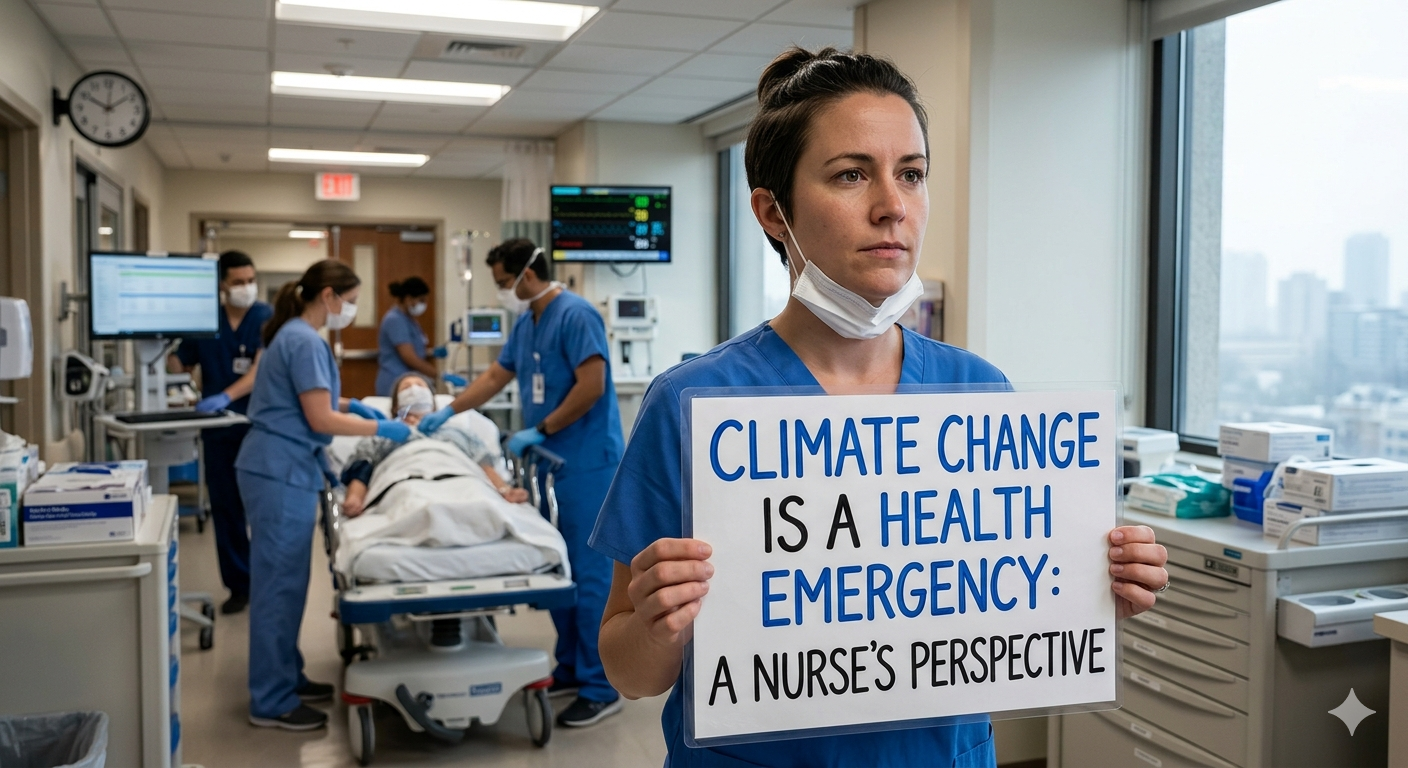
Climate Action: Hopeful Nurses Face Urgent Health Crisis
Every nurse remembers a patient who arrived too late in the emergency room. For me, it was an elderly man admitted with heatstroke after the temperature in his room reached 48°C during a severe heatwave. His case did not feel like an isolated medical emergency; it felt like a warning. According to Mani et al. (2025), extreme heat events have caused more than 234,000 deaths worldwide between 1900 and 2023, with Southern Asia experiencing the highest frequency of incidents. These statistics transform climate change from an environmental concern into a daily clinical reality.
At the same time, nurses represent the largest portion of the global healthcare workforce, yet most receive little or no formal education about climate-related health risks (Castleden et al., 2020). This gap matters because nurses are often the first professionals to assess symptoms, provide education, and support prevention. This blog addresses Sustainable Development Goal (SDG) 3 (Good Health and Well-Being) and SDG 13 (Climate Action) by arguing that climate literacy must become a core nursing competency rather than an optional topic.
Recent evidence highlights the unequal burden of climate-related health risks. Mani et al. (2025) reported that Southern Asia experienced 52 extreme heat incidents, with Pakistan recording one of the highest average event magnitudes at 47.6°C. Although Pakistan contributes less than 1% of global greenhouse gas emissions, the country remains highly vulnerable to climate disasters. The 2022 heatwaves and floods affected approximately 15% of the population and exposed millions to displacement, water contamination, and infectious disease risks (Somani, 2023).
In response, technological innovations are beginning to support prevention and early warning. Mobile phone heat-alert systems can notify communities before dangerous temperature spikes, while artificial intelligence tools help predict flood patterns and identify high-risk regions. These tools have strong potential to support community health nurses who work directly with vulnerable families. However, technology alone cannot replace the role of nurses in education, prevention, and trust-building within communities.
Clinical experiences from different regions illustrate how nurses already adapt to climate-related health threats. In Pakistan’s flood-affected communities, nurses often prioritize hygiene education, safe water practices, and infection prevention to reduce outbreaks of diarrheal and waterborne diseases. Meanwhile, in drought-prone regions of Kenya, nurses distribute zinc supplements and promote nutrition strategies before predicted dry spells to reduce the risk of malnutrition and illness among children.
These examples show that nurses are already responding creatively to climate-related challenges, even without formal training. Unfortunately, this frontline innovation exists alongside a significant educational gap. Castleden et al. (2020) found that many graduate health programs still include few climate-related subjects, leaving future nurses underprepared to respond to emerging environmental health threats. Without structured climate education, nurses must rely on informal learning and personal initiative rather than systematic training.
The health impacts of climate change are becoming increasingly visible in everyday patient care. Heat exhaustion, respiratory illnesses after floods, skin infections, vector-borne diseases, and waterborne infections are appearing more frequently in clinical settings. Alongside these physical effects, climate-related anxiety and psychological distress are emerging as important mental health concerns. Vulnerable populations, including older adults, children, and people living in poverty, are disproportionately affected. When nurses do not recognize the connection between climate risks and health outcomes, opportunities for prevention may be missed.
Conversely, when nurses are prepared and confident, even brief conversations with patients can support meaningful change. A short discussion about hydration, early warning signs, safe shelter, or emergency planning can reduce health risks during extreme weather events.
Integrating climate literacy into nursing education would strengthen the profession’s ability to respond to current and future health emergencies. Climate-informed nursing practice does not require entirely new roles; rather, it builds on existing skills in patient education, community engagement, and preventive care. Nursing curricula could include modules on environmental health, disaster preparedness, and sustainable healthcare practices. These additions would empower nurses to recognize climate-related risks, communicate effectively with patients, and collaborate with multidisciplinary teams.
Furthermore, healthcare institutions could support nurses by offering continuing education, workplace training, and climate-responsive policies. Such efforts align closely with the World Health Organization’s (2023) framework, which emphasizes the importance of integrating health considerations into climate mitigation and adaptation strategies.
Ultimately, climate change is no longer a distant or abstract threat. It is reshaping the types of patients’ nurses see, the illnesses they manage, and the conversations they must initiate. Nurses who understand climate health are better positioned to protect the most vulnerable members of society. A practical first step can be simple: identify one patient who may be at risk from extreme weather and spend five minutes discussing prevention, hydration, shelter, or early warning signs.
Small conversations can create meaningful awareness and strengthen community resilience. Climate change will remain one of the defining health challenges of this century. Nurses must lead the response, one informed interaction at a time.
References
Castleden, H., Lin, J., & Darrach, M. (2020). The public health emergency of climate change: how/are Canadian post-secondary public health sciences programs responding? Canadian Journal of Public Health, 111(6), 836–844. https://doi.org/10.17269/s41997-020-00386-3
Mani, Z., Ranse, J., & Goniewicz, K. (2025). Why extreme heat weather is a global health emergency: a retrospective analysis. International Journal of Emergency Medicine, 18(1), Article 255. https://doi.org/10.1186/s12245-025-01062-4
Somani, R. (2023). Global warming in Pakistan and its impact on public health as viewed through a health equity lens. International Journal of Social Determinants of Health & Health Services, 53(2), 154–157. https://doi.org/10.1177/27551938231154467
World Health Organization (2023). A framework for the quantification and economic valuation of health outcomes originating from health and non-health climate change mitigation and adaptation action. World Health Organization. https://iris.who.int/handle/10665/367385
Author Bio
Razia Bano Momin, RN, NM, BScN, is a clinical nurse educator and registered nurse with more than 22 years of diverse healthcare experience across emergency services, dialysis, operating room nursing, and undergraduate nursing education. She serves as an American Heart Association basic life support instructor and is currently pursuing her Master of Science in Nursing. Her scholarly work focuses on mental health, nursing education, climate change and health, and community-based health promotion. She has co-authored peer-reviewed publications on adolescent mental health and the development of mental health competencies among undergraduate nursing students. Razia is passionate about empowering nurses to lead in research, education, and global health advocacy.

Publication:
Tharani, A., Tharani, Z., Lalani, S. B., Momin, R. B., & Bhamani, S. S. (2024). The intersection of gender and mental well-being among adolescents in Pakistan: Challenges, strategies, and future recommendations. In M. Carotenuto (Ed.), Mental health of children and adolescents in the 21st century (1st ed.). IntechOpen. https://doi.org/10.5772/intechopen.1003953
Tharani, A., Lalani, S., Mughal, F. B., & Momin, R. B. (2022). Developing mental health competency in undergraduate nursing students amid pandemic: a hybrid model approach. Teaching and Learning in Nursing, 17(3), 277-281. https://doi.org/10.1016/j.teln.2022.03.007

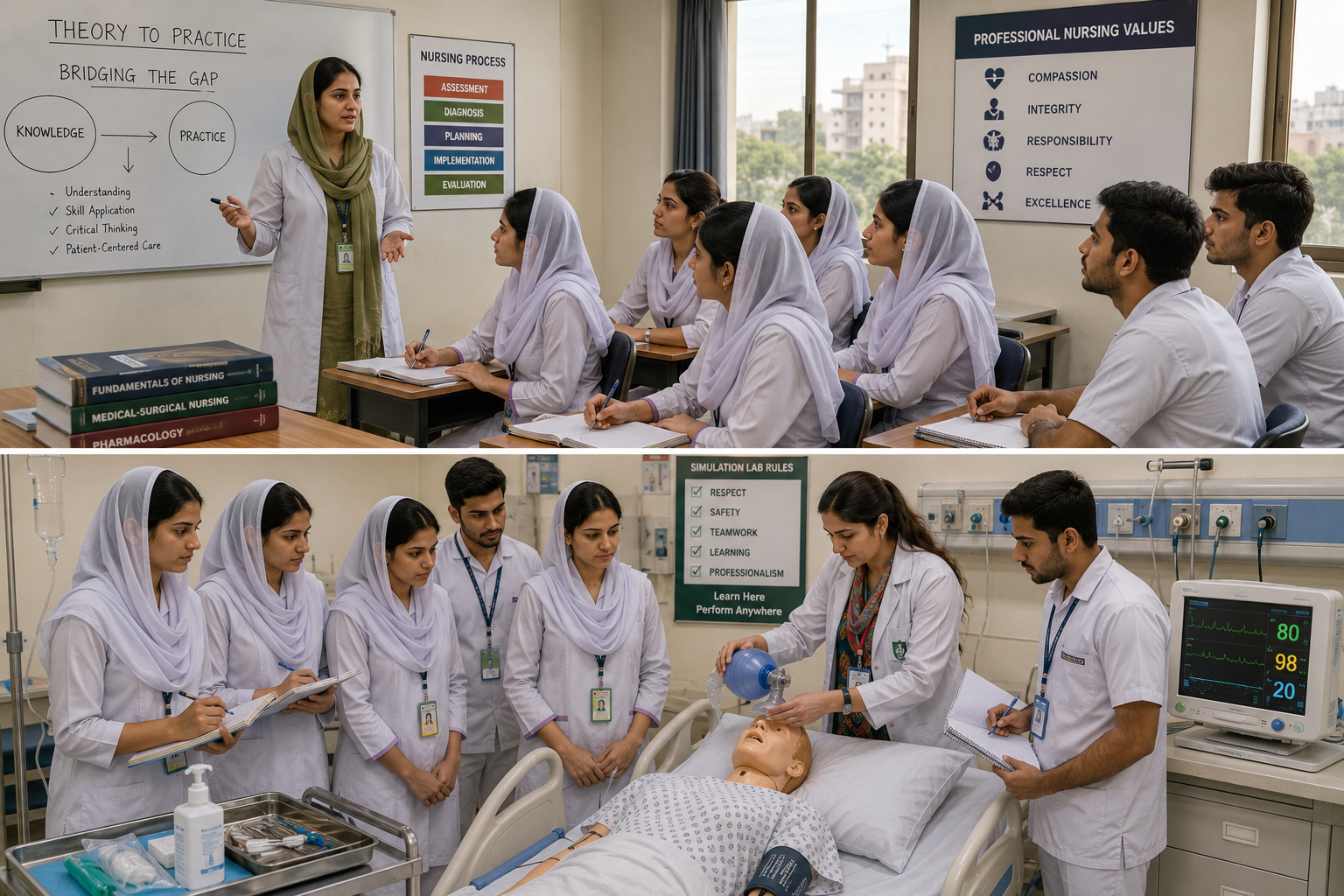



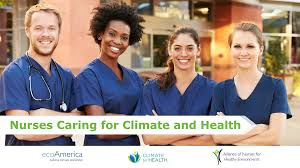
Nurses are among the first responders, so they should be educated about climate health because protecting the environment today helps secure a healthier future for everyone.
Great content! Keep up the good work!