 Scholar Nurse
Author Bio:
Shahnawaz is a Master of Science in Nursing student at Aga Khan University and a BScN gold medallist. He has been a passionate writer, contributing columns to the Sindhi newspaper. His interests include nursing advocacy and public health research. Shahnawaz is dedicated to making a positive impact in healthcare in the community.
Transgender, Gender equality in healthcare is a universal issue that demands methods to meet the needs of all genders, including marginalized communities. Even though healthcare systems have improved facilities for both men and women, transgender individuals still face difficulties in accessing essential healthcare services. (Younus et al., 2022) . This never-ending gap highlights general inequalities in healthcare structure, medical education, and social norms. Marginalized gender groups often face discrimination, anxiety of mistreatment, and a lack of culturally sensitive care, leading to delayed or avoided treatment. (Patel et al., 2024). Addressing these differences is important for achieving true gender equity in healthcare and meeting Sustainable Development Goal 5: Gender Equality.
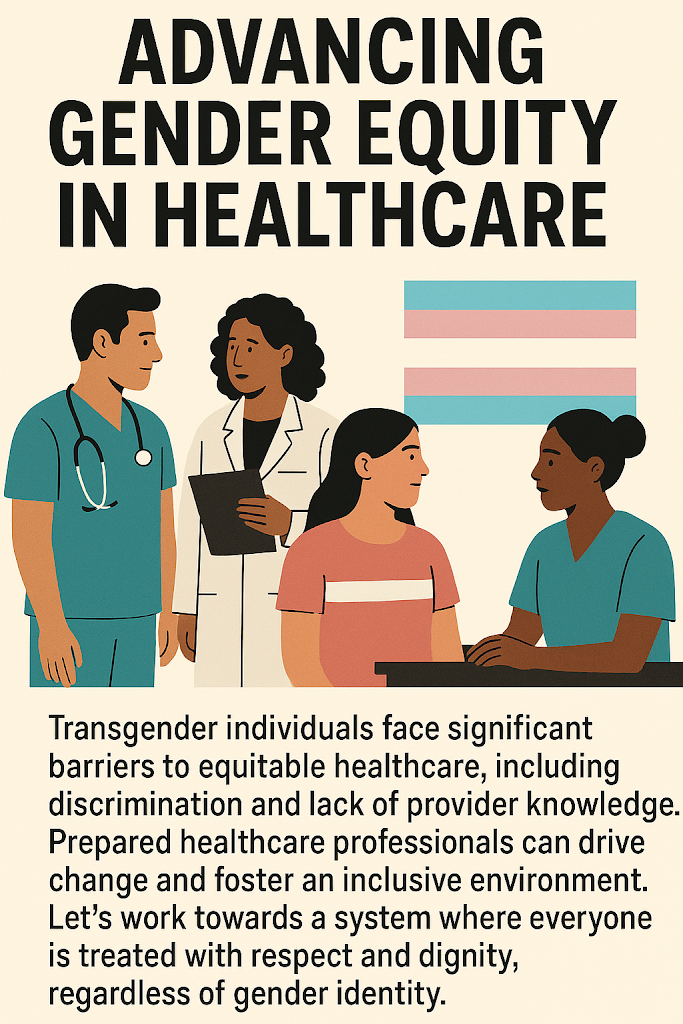
Transgender individuals face significant barriers to get equitable healthcare. One research study highlights that the transgender patients report high rates of humiliation and discrimination from healthcare providers, the absence of inclusive care, and inadequate provider knowledge. (Ahmad et al., 2024). ). In Pakistan, cultural taboos and the absence of gender-inclusive healthcare policies further worsen the situation. Unprepared healthcare providers need training to address the diverse needs of transgender patients. It is important to recognize these gaps and implement comprehensive and inclusive healthcare to improve the dignity and rights of all individuals, regardless of gender identity.
Healthcare professionals have a vital role in decreasing gender disparities and improving an inclusive and equitable healthcare environment. Evidence suggests that integrating gender diversity into medical education significantly improves health care delivery and health outcomes for transgender individuals (Patel et al., 2024). To train healthcare professionals in inclusive care and respectful communication can help providers to build trust with transgender patients.
Furthermore, it addresses gaps in knowledge, challenges of unfairness, and prepares professionals to bring culturally sensitive care. Through learnt education and inclusive practice, healthcare professionals can lead significant change toward an equitable healthcare system for all.
Gender equity in healthcare settings means making sure that everyone gets the equal care they need, regardless of their gender, without any fear or discrimination. To attain an equitable healthcare environment, healthcare systems should recognize the unique needs of all patients, especially transgender communities. If we don’t vigorously work to make care more inclusive, these marginalized communities will continue to face unfair treatment and deprived health outcomes.
Healthcare professionals, especially public health leaders, can play a powerful role in changing this through education, advocacy, and respectful care. But actual change also starts with each of us, by understanding, learning, and supporting policies that promote equal healthcare for all. Together, we can build a system where everyone feels respected and cared for.
References
Ahmad, H. F., Banuri, S., & Bokhari, F. (2024). Discrimination in healthcare: A field experiment with Pakistan’s transgender community. Labour Economics, 87, 102490. https://doi.org/https://doi.org/10.1016/j.labeco.2023.102490
Patel, J., More, S., Sohani, P., Bedarkar, S., Dinesh, K. K., Sharma, D., Dhir, S., Sushil, S., & Ghosh, R. S. (2024). Reshaping the equitable and inclusive access to healthcare: A qualitative study. Clinical Epidemiology and Global Health, 26, 101544. https://doi.org/https://doi.org/10.1016/j.cegh.2024.101544
Younus, J., Baig, L. A., Ahmer, Z., Memon, A., & Aly, M. (2022). Exploring the Barriers Faced by Transgenders for Accessing Healthcare Facilities in the Metropolitan City of Karachi. Pakistan Journal of Public Health, 12(4), 183-187. https://doi.org/10.32413/pjph.v12i4.1025